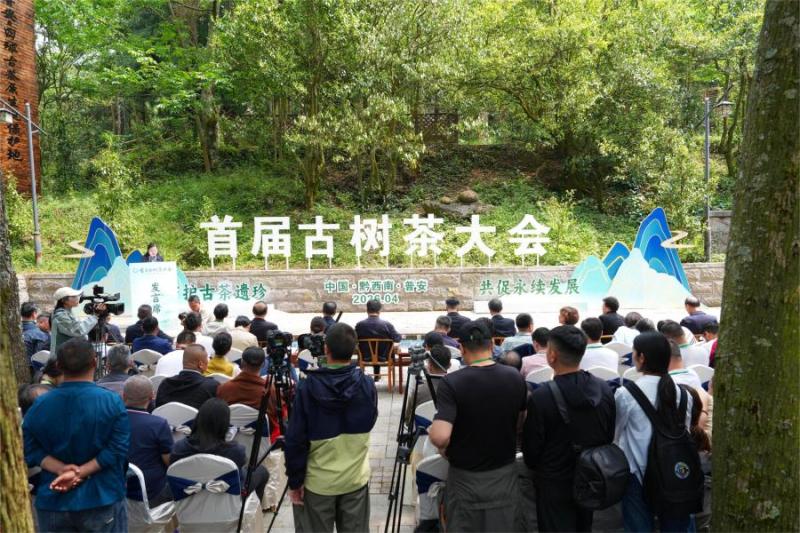
On April 20, the first Ancient Tea Tree Conference opened in Pu’an County, Qianxinan, drawing experts, tea companies and growers to the globally recognized birthplace of the tea plant and China's earliest spring tea producer. Co-hosted by the China Association for the Promotion of International Agricultural Cooperation and the Guizhou Tea Association, the event focused on protecting and developing ancient tea resources. Speakers included Mu Degui, former vice chairman of the provincial people’s congress and head of the Guizhou Tea Association; officials from the provincial agriculture department and local government; CPC GZU Committee Secretary Yang Wei; and Vice President Chen Xiangsheng. Pu’an and GZU signed two agreements — one on university-local cooperation, one on industrializing new Sijiu tea varieties — worth RMB 15 million in technology transfer.
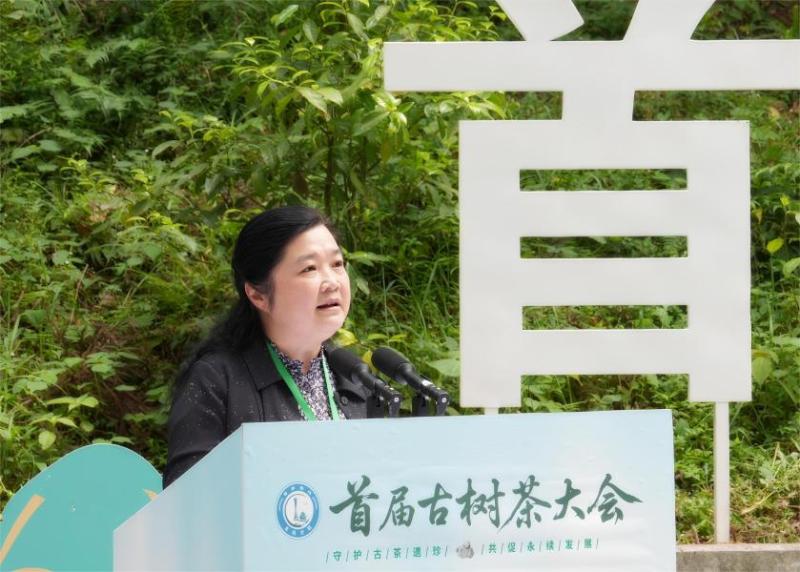
Yang said President Xi Jinping’s guidance sets the direction for green growth, brand building, rural industry and the protection of ancient tea. GZU, she said, has always known it “belongs to Guizhou”: as the province’s higher-education flagship, it is rooted here and measures itself by what it gives back. For 15 years Niu Suzhen’s team has worked alongside Pu’an to protect ancient tea roots, grow the industry and build the brand, turning Sijiu germplasm into a story of university-local partnership, science-driven tea and prosperity for growers. She hopes the partnership will keep the tea “alive,” the varieties “strong,” the technology “sharp” and the growers “prosperous.”
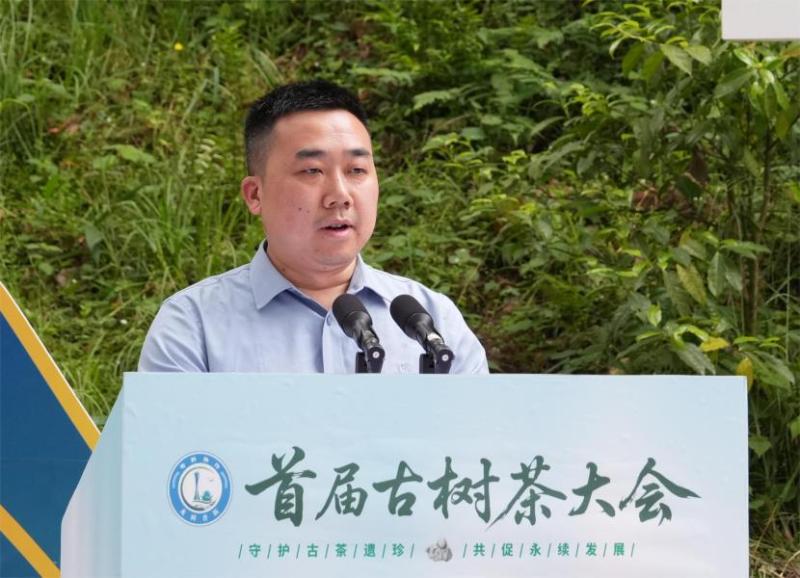
Wu Jian, dean of GZU’s Institute of Science and Technology, framed the work around three questions — why transfer, what to transfer, how to go deeper — and described how GZU has turned rare wild Sijiu germplasm into chain-wide technical support for Pu’an’s tea upgrade. Transferring research, he said, is the only route to a stronger tea industry and a revitalized countryside. Going forward, GZU will focus on four things: premium varieties to anchor the brand, scale to widen the breeding and extension system, quality across the chain to hold the ecological line, and returns to farmers to power growth.
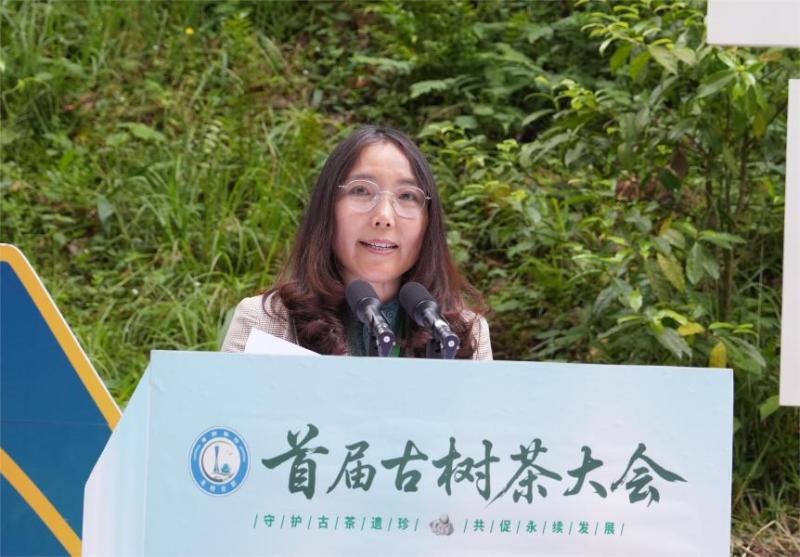
Niu Suzhen, vice dean of GZU’s Institute of Agricultural Bioengineering and College of Life Sciences, presented a report on conserving and commercializing Pu’an’s Sijiu germplasm. Fifteen years of work, she said, produced three breakthroughs. First, breeding: the team is among the first in China to develop new tea varieties from the ancient genes of wild tea-section plants, releasing Guicha No. 1 and No. 2 and Guihong No. 1 and No. 2. Second, quality: the Guicha lines are rich in dihydroxy catechins, pectin and rare aroma precursors, yielding black tea with “a fresh sweetness, honeyed fruit notes and a golden cup” whose key aroma, taste and color compounds far outstrip large-leaf black tea — a genetic signature no one else can copy. Third, systems: the team has built a full chain from germplasm storage and propagation to green pest control and processing, with over 700 mu of conservation sites, domestication plots and mother-tree gardens, plus 10 technical standards.
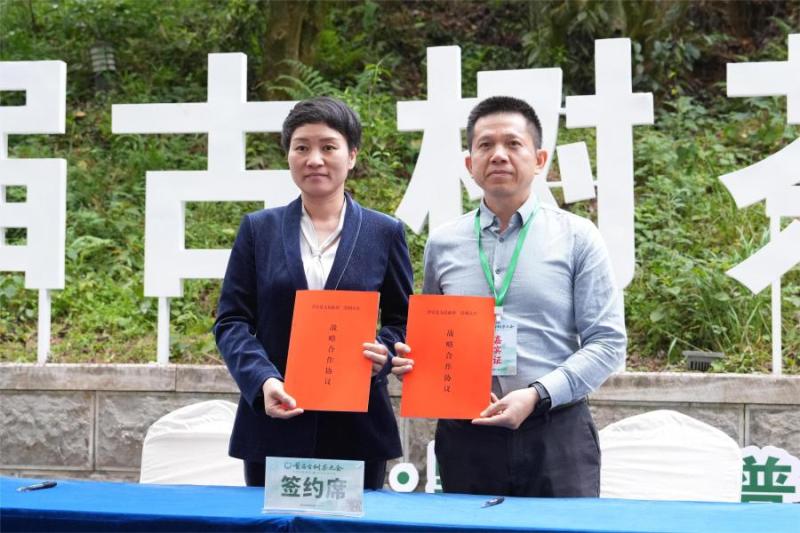
Chen Xiangsheng and Guo Yuanyuan, Pu’an’s county magistrate, signed the university-local agreement. Drawing on GZU’s national key laboratories for green pesticides and for mountain plant resources, its tea, bioengineering, mechanical engineering and fine arts schools and other platforms, the two sides will set up a Pu’an tea commercialization workstation and a joint research platform, and co-build teaching, training, agro-tourism and “science backyard” sites to nurture talent for the industry.
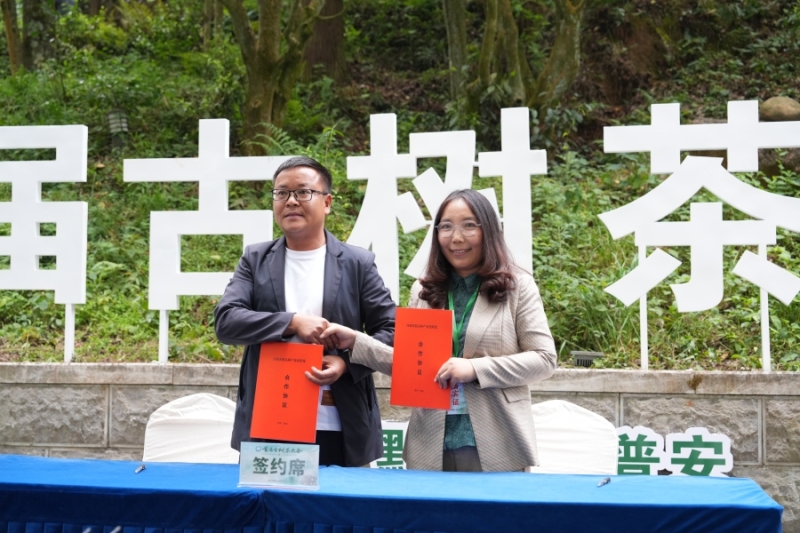
Niu and Wu Yingkai of Pu’an Longrun Tea signed the variety agreement, licensing the four new cultivars to the company for growing, processing and sales, backed by end-to-end technical support, breeding and product R&D, and training for growers.
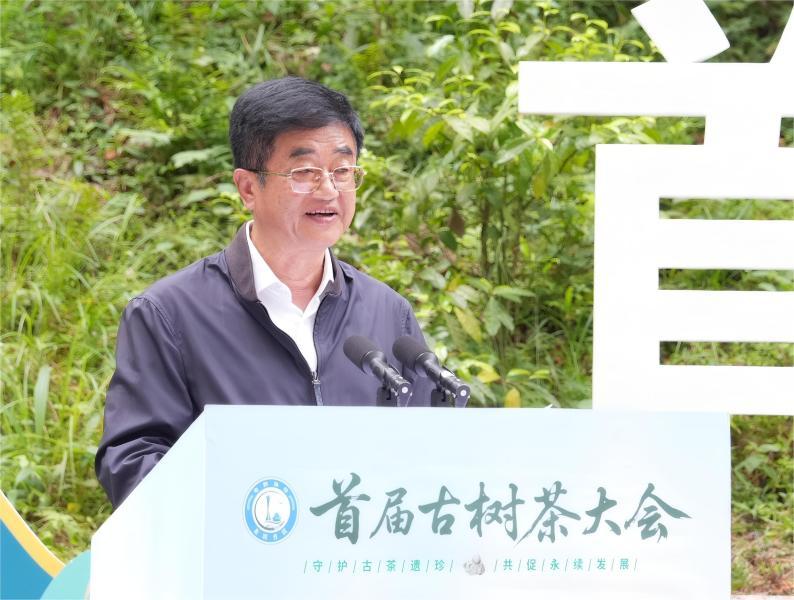
Mu Degui said the conference puts Xi’s “three teas” approach — culture, industry and science — into practice and carries out provincial plans to upgrade the tea sector, while making the most of Guizhou’s ancient tea heritage and its standing as a national leader in the field. The agreements signed, he said, will speed that work along. He urged colleagues to value the resource and its history, to grasp why Pu’an was chosen to host, and to write a new chapter in Guizhou’s ancient-tea story — turning scarce ecological assets into momentum for regional growth and shared prosperity, and adding Guizhou’s strength to rural revitalization and China’s tea industry.
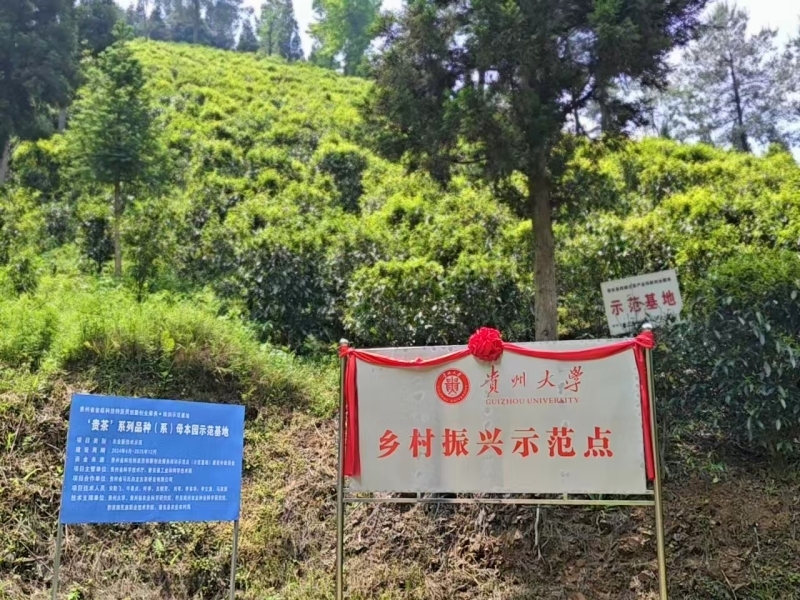
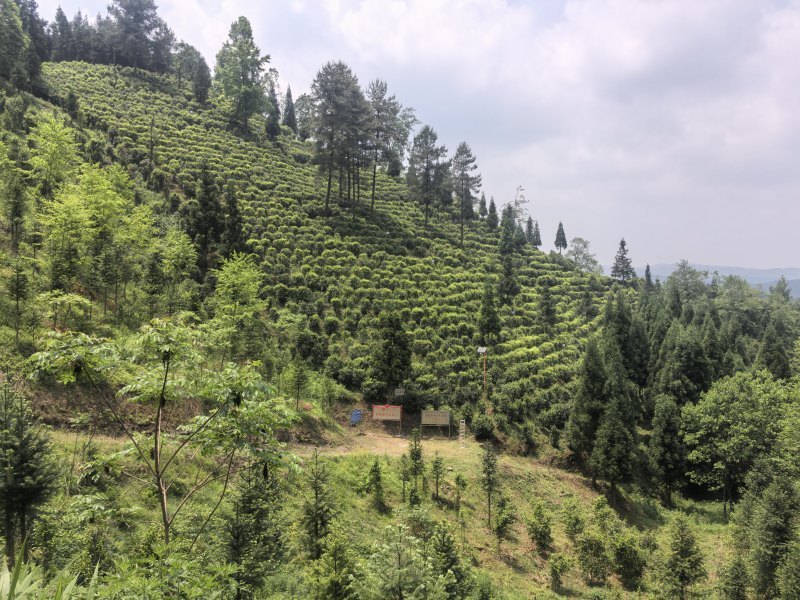
Earlier, Yang Wei inspected GZU’s wild Sijiu domestication base with heads of the science and technology institute and the external cooperation office, and unveiled a rural revitalization demonstration base.
Pu’an is home to more than 20,000 wild Sijiu ancient tea trees — the largest such grove anywhere — which is why its tea is known as “a living fossil you can drink.” GZU has built the country’s first in-situ conservation site and first domestication base for wild Sijiu tea, upending the assumption that wild tea resources cannot be developed at scale. The team’s varieties carry irreplicable advantages in flavor, ecology and market value. In 2024 and 2025, green-leaf output in Qingshan Township topped RMB 28 million for two years running, adding more than RMB 3,000 a year to each of 500-plus households.
Editor: Pang Aizhong
Chief Editor: Li Xufeng
Senior Editor: Yao Zuozhou
Translator: Du Xiaorui


